 Skip to content
 The years before the war, 1945 to 1960
The war grew out of the fight against French colonial rule. At the end of the Second World War in 1945 Japanese occupation ended, and on 2 September Ho Chi Minh declared an independent Vietnam. A few weeks later the French, who had been ousted from their colony during the war, returned to “claim our inheritance”, in General Leclerc’s words. The Vietnamese fought on until their decisive victory at Dien Bien Phu in May 1954.
The Geneva Accords of 1954, agreed by France, Vietnam, Laos, China, Cambodia, the Soviet Union and the United Kingdom, ended foreign involvement in Indochina and divided Vietnam at the 17th parallel. The North was ruled by the Communist Party, and the South by the staunchly anti-communist Ngo Dinh Diem. Elections that were meant to reunify the country were never held.
Over the next years communist forces slowly infiltrated the South, Diem’s corruption became harder to ignore, and the Ho Chi Minh Trail grew into a network of paths for moving people, weapons and supplies from North to South. By the end of 1960 the campaign to “liberate” the South was under way, and the National Liberation Front (NLF, later known as the Viet Cong) had been founded.
The United States enters the war, 1961 to 1967
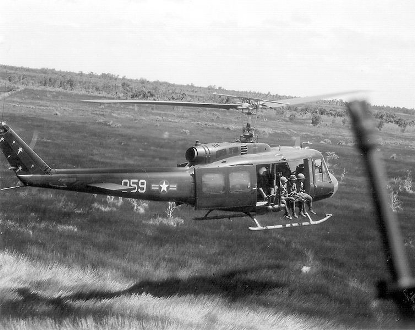
The US had been involved for years, first funding the French and then propping up Diem’s unpopular government, all in the name of fighting the spread of communism. In August 1964, after two disputed incidents involving American destroyers in the Gulf of Tonkin, the US Congress passed the Gulf of Tonkin Resolution, which gave President Lyndon Johnson wide powers to wage war. In March 1965 the bombing of the North (Operation Rolling Thunder) began and the first US combat troops landed at Da Nang. By the end of 1965 there were close to 200,000 US troops in Vietnam.
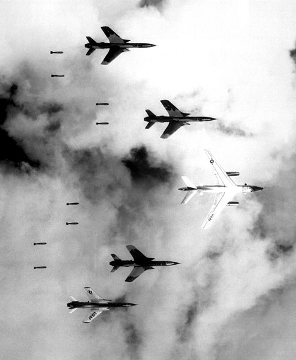
Hanoi had not expected such strong US support for the South. The vision of a quick unification gave way to the realisation that this would be a long war. The North had introduced conscription in 1960 and now adopted a strategy of protracted war, intended to bog down the US in a conflict it could not win and to make it politically impossible for American troops to stay. Though costly in lives on both sides, in the end it worked.
Operation Cedar Falls began on 8 January 1967, a campaign to clear NLF forces from the “Iron Triangle” north of Saigon. It was the war’s largest ground operation to that date, involving more than 30,000 American and South Vietnamese troops. The area was an NLF stronghold and home to the Cu Chi tunnels, a network of underground shelters where fighters could hide for weeks. The operation used saturation bombing, artillery and intense patrols, and was largely unsuccessful: within two days the NLF had begun to return, and the area became a staging ground for the next year’s Tet Offensive.
The Tet Offensive, 1968
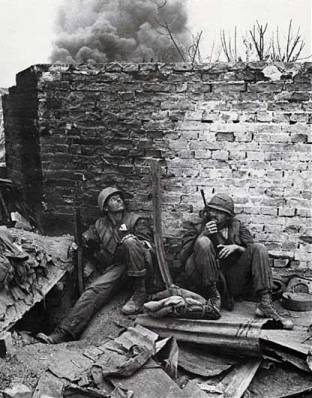
On 30 January 1968 the North Vietnamese and the NLF launched a three-phase offensive meant to spark an uprising across the South and to turn the American public against a war that had already lost support. It began on the first days of Tet, the lunar new year and Vietnam’s most important holiday, when both sides had agreed to a truce. Forces massed near Khe Sanh to divert attention, then about 80,000 fighters attacked more than 100 towns and cities, catching US and South Vietnamese forces unprepared.
The attackers were beaten back in most places, but fighting in Hue lasted almost a month and left thousands of civilians dead and much of the city destroyed. The North suffered huge casualties compared with relatively few American deaths, yet the offensive was a psychological victory and is widely seen as the turning point of the war. Americans had been told the war was being won, and its scale shook that belief. In March President Johnson announced he would not seek re-election.
Nixon, Vietnamisation and the bombing, 1969 to 1972
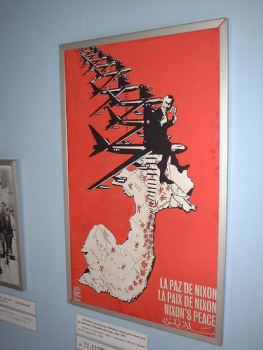
Richard Nixon took office in January 1969 and expanded the bombing of Cambodia to attack communist supplies and bases. Ho Chi Minh died on 2 September 1969, and the war went on. In November 1969 news of the My Lai massacre of 16 March 1968, in which US soldiers killed hundreds of unarmed villagers, finally reached the American public and raised serious questions about how the war was being conducted. The US relied increasingly on air power and began to withdraw soldiers, leaving South Vietnamese troops to defend the South on the ground.
Peace talks ran from 1969 to 1972 with little result. A main obstacle was North Vietnam’s demand that South Vietnam’s president, Nguyen Van Thieu, be removed, which the US refused. Those years saw heavy bombing of Cambodia and the use of neutral Laos as a battleground. American troop numbers fell below 200,000 in 1971. In December 1972 Nixon ordered the “Christmas bombing” of Hanoi and Haiphong to force concessions at the negotiating table, and it was widely condemned abroad.
The Paris Peace Accords and the end, 1973 to 1975

The Paris Peace Accords, signed on 27 January 1973 by Henry Kissinger and Le Duc Tho, set 60 days for the withdrawal of all US troops and called for elections in North and South, which were not held. Prisoners of war were exchanged. The war between Vietnam and the United States was over, but the fighting between North and South went on for two more years.
After the Americans left, the advantage shifted back and forth. The North improved the Ho Chi Minh Trail until it became a drivable road, and received more support from the communist bloc, while the US Congress cut its aid to the South. In early January 1975 the North took Phuoc Long province, and when the US did not intervene it was clear that this was the beginning of the end. On 10 March 1975 the North took Ban Me Thuot in the Central Highlands, an easy victory, and the South Vietnamese army began to collapse. Hue fell in late March, then Da Nang.
The fall of Saigon, 30 April 1975
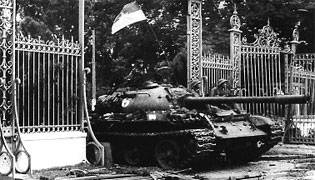
As the North’s forces neared Saigon, the last Americans were evacuated, and some took Vietnamese friends and families with them. Many South Vietnamese who had worked for the US army or the government and feared for their lives could not get out. Some were later deported to the countryside, others to re-education camps.
On 30 April 1975 North Vietnamese tanks drove through the gates of the Presidential Palace (now the Reunification Palace) in Saigon and raised the flag. The war was over. The country was formally reunified in 1976, and Saigon was renamed Ho Chi Minh City.
More than 58,000 Americans died in the war. Estimates for Vietnamese deaths, soldiers and civilians, vary but run into millions: the Vietnamese government’s figure is about 3 million. The United States also dropped millions of tonnes of bombs on Vietnam, Laos and Cambodia, and sprayed herbicides including Agent Orange over parts of the South.
The war’s legacies
Much of what the war left behind is still here. Unexploded bombs and mines have killed or injured more than 100,000 people since 1975, and clearance continues; our page on unexploded ordnance has the current figures. The pages on Agent Orange and dioxin are being brought back to the site. Vietnam and the United States normalised relations in 1995, and today the US is among the country’s biggest trading partners and a growing source of visitors.
Places in Vietnam to see the war’s history
Most of the sites below are in or near the places visitors go anyway. Opening hours and ticket prices change, so check them close to your visit.
War Remnants Museum, Ho Chi Minh City
The best-known museum on the war, with photography, aircraft and armour in the yard, and a hard-hitting account of the conflict from the Vietnamese side. It can be distressing, particularly the sections on Agent Orange. Allow a couple of hours. Our guide to the museums of Saigon covers it and the others worth your time.
Reunification Palace, Ho Chi Minh City
The former presidential palace of South Vietnam, where the tanks arrived on 30 April 1975. The rooms are kept largely as they were, including the war rooms in the basement. It is part of the Ho Chi Minh City guide.
Cu Chi tunnels
About 60 to 70 km north-west of Saigon, the Cu Chi tunnels were the underground base of the NLF in the Iron Triangle. You can walk through short, widened sections of tunnel, see the traps and learn how people lived below ground. The Cu Chi tunnels page covers how to get there by car and which site to choose.
Con Dao prisons
On Con Dao island, French colonial and later South Vietnamese governments held thousands of political prisoners, including the “tiger cages”. The prisons and the cemetery at Hang Duong are the heart of a visit to the island. See Con Dao for flights, ferries and the sights.
Hue Citadel
The imperial citadel was badly damaged in the Tet fighting of 1968, and parts of the walls still show it. Much has been restored. Hue is also the gateway to the former Demilitarized Zone.
The former DMZ and Quang Tri
North of Hue, Quang Tri province was the front line along the 17th parallel. Sites include the Hien Luong bridge, the Vinh Moc tunnels where a village lived underground, and the Khe Sanh combat base museum. A longer guide to the DMZ is on the DMZ near Hue page. Quang Tri is also the province most affected by unexploded ordnance: stay on marked paths.
Hanoi
The Hoa Lo prison museum (the “Hanoi Hilton” to American airmen) and the B-52 Victory Museum, which commemorates the Christmas bombing of 1972, tell the story from the northern side.
Visiting with care
The war is recent history for many people you will meet, and many Vietnamese families lost relatives. Visit sites with respect, avoid joking about the war and be careful what you photograph. Museums present the Vietnamese view; reading something from the American side as well gives a rounder picture.